
Learn how to choose shoes and sandals for flat feet, including width, stable support, heel security, cushioning and compatibility with insoles.
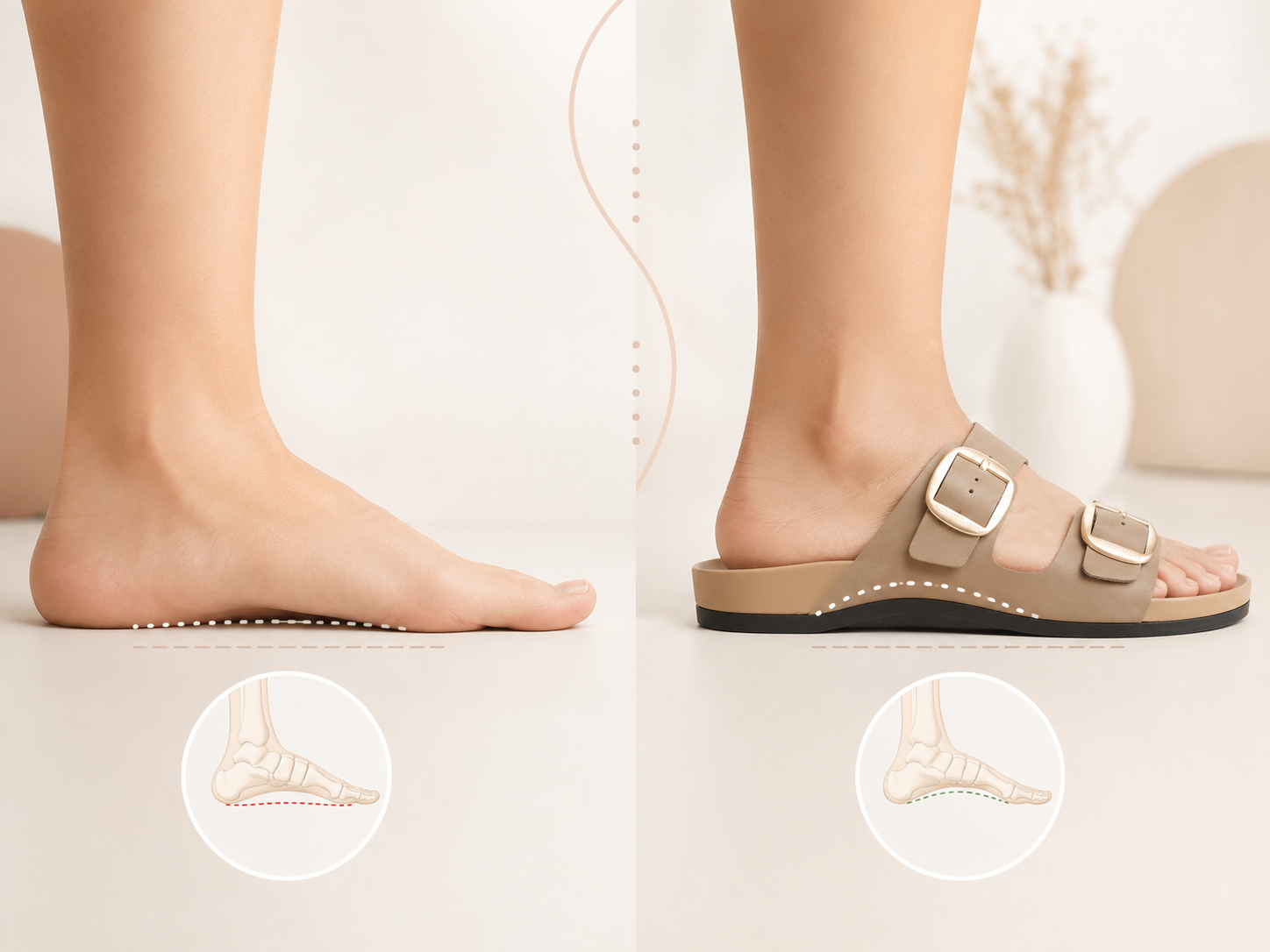
Flat feet describe a foot shape in which the arch appears low or makes greater contact with the ground while standing. Some people naturally have low arches and experience no pain or movement problems.
Having flat feet does not automatically mean that you need special footwear, insoles or treatment. Footwear support becomes more relevant when you experience discomfort, repeated fatigue or difficulty standing and walking comfortably.
No. Many people with flat feet do not experience symptoms. Others may notice tired feet, heel discomfort, arch discomfort or reduced comfort after prolonged standing and walking.
A sudden change in one foot, persistent swelling, significant pain or difficulty walking should be assessed by a qualified healthcare professional.
People often focus only on arch support, but footwear width is equally important. Shoes that are too narrow may squeeze the toes and sides of the forefoot.
Look for a rounded or wider toe area that allows your toes to move naturally without pressing against the upper.
A shaped footbed may improve comfort for some people with low arches. The support should feel stable and comfortable without creating excessive pressure beneath the arch.
More arch support is not automatically better. The correct level depends on your foot shape, footwear and daily activity.
The middle section of the shoe should provide enough structure for standing and walking. If the footwear folds completely through the centre with very little resistance, it may feel less stable during prolonged use.
The front of the sole should still flex naturally where the toes bend.
A secure heel area helps reduce unnecessary movement inside the shoe. Enclosed footwear may use a firm heel counter, while sandals may use shaped heel support and adjustable straps.
Loose footwear may cause the toes to grip in an attempt to keep the shoe or sandal in place.
Adjustable fastenings make it easier to accommodate different foot widths and instep heights. They also help hold the foot more securely than completely loose slip-on footwear.
Cushioning can improve comfort on hard surfaces, but it should be combined with a stable base. A sole that is extremely soft may feel comfortable initially but may not provide enough stability for some wearers.
Footwear with a removable liner may be useful when you want to use an additional shoe insert or professionally prescribed orthotic.
Make sure the shoe has enough width and depth after the insert is added. Placing a thick insole inside shallow footwear may make the shoe too tight.
Supportive sandals may be practical for casual daily wear in Malaysia’s warm climate. Look for adjustable straps, a shaped footbed, a stable sole and enough width for your foot.
Enclosed footwear may provide more coverage and heel security for work, travel or longer walks. Choose a design with adequate toe room and a fastening system that keeps the foot secure.
Off-the-shelf inserts may provide cushioning and general support. Custom orthotics are individually made devices that may be recommended for specific needs.
Insoles should not be described as a guaranteed way to correct or cure flat feet. The footwear itself must still fit correctly and provide enough space for the insert.
The right footwear should feel secure, stable and comfortable according to your individual foot shape.
Browse AK Footwellness supportive footwear and arch support sandals in Malaysia.
No. Many people with flat feet have no symptoms and do not require special treatment. Footwear changes may be considered when discomfort or functional problems are present.
No. Support should match your individual foot shape and feel comfortable. Excessive pressure under the arch may be unsuitable.
This depends on the condition, fit, width and depth of your existing footwear. An insole cannot compensate for shoes that are worn out, unstable or too narrow.
Important: This article provides general educational information. Seek professional advice if flat feet are associated with persistent pain, swelling, weakness, numbness or a sudden change in foot shape.